Statement
Valedictory Speech
Maiden Speech
About
ABOUT
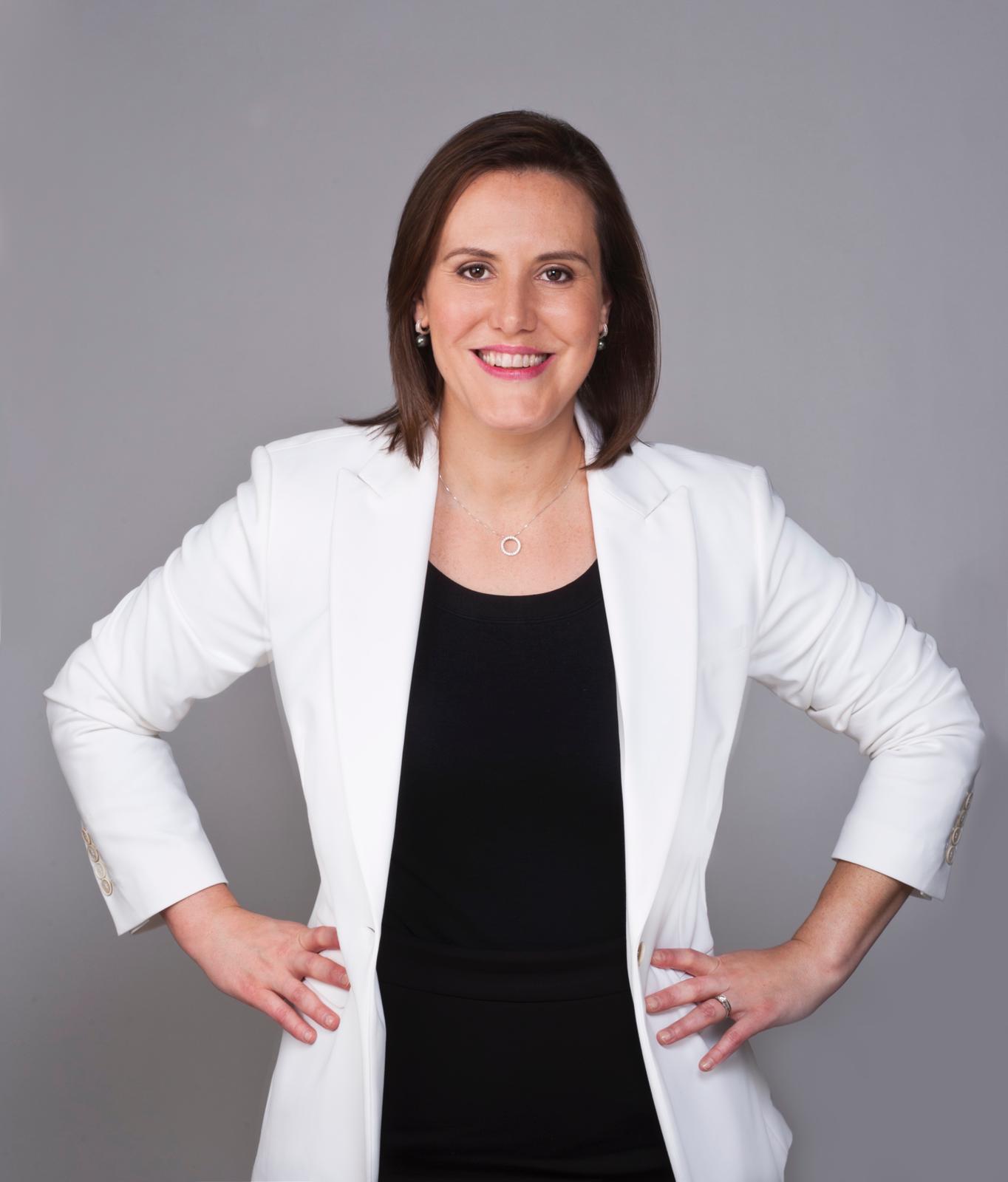
Kelly served as the Federal Member for Higgins, a member of Federal Cabinet and Cabinet's Expenditure Review Committee before her retirement in 2019.
Kelly has held a number of senior economic portfolios including Minister for Jobs and Industrial Relations and Minister for Women; Minister for Revenue and Financial Services; Assistant Treasurer; and Minister for Small Business.
Kelly
has also served as Minister Assisting the Prime Minister for the Public Service as well as Parliamentary Secretary to the Treasurer.
In her portfolio roles Kelly has helped cut both company and personal income tax; made significant reforms to the superannuation sector saving millions of Australians billions of dollars in their retirement; delivered a $328 million
record funding package to combat domestic violence against women and girls; made changes to the financial services sector to make it more consumer friendly; and made the biggest reform to employment services in more than 20 years to
help more Australians into work.
She is also proud to have introduced the first ever Women's Economic Security Statement - a $119 million package to help women and girls build their financial security.
Kelly is the first women to serve in Cabinet in a Treasury portfolio, the youngest women appointed to Cabinet, and the first Cabinet Minister to give birth whilst in office.
Before serving in Parliament Kelly had a career in law and banking.
Kelly is an Ovarian Cancer Australia Ambassador, Patron of the Stonnington City Brass and Patron of the East Malvern Girls Football Club.
Kelly is married to Jon and has two children, Olivia and Edward.
Statement
I joined the Liberal Party as a 17 year old because I believe people should be free to choose their own paths in life, that they should be rewarded for hard work and enterprise, and that everyone, regardless of background or
circumstance, deserves respect and the opportunity to live their best life.
I have been profoundly grateful for the opportunity to represent those values and the privilege of representing my local community's issues, both big and small, as the Federal Member for Higgins.
However, today, after much agonising and with a heavy heart, I am announcing that I will not recontest the next election.
This decision has been made both harder, and easier, because of my admiration for, and friendship with the Prime Minister and my conviction that he will lead our Government to victory in May.
I need to be honest that I cannot commit to serve another three years and continue to deliver the quality of service that my country, Party and community are entitled to expect. There have been too many by-elections of late, and I have
no intention of causing one in the next Parliament.
The reasons are complex, and the most compelling are deeply personal. Normally, I wouldn't canvass them at all, but some will no doubt try to use my announcement to advance their own agendas - and I do not want that.
I start today with the words that concluded my very first speech in this place:
“I will never forget that politics is about people. And that people can make a difference. That is why I am here. I look forward to playing my part in building an even better Australia.”
I have been profoundly grateful for the opportunity to represent those values and the privilege of representing my local community's issues, both big and small, as the Federal Member for Higgins.
Going on a decade as the Federal Member for Higgins, I believe that I have been able to do that.
As anyone who has had the honour of serving in this place knows, you can’t make a contribution here without a lot of support.
I want to start by thanking the people of Higgins for the privilege of representing them in this place and for entrusting me to represent their issues both big and small. I especially want to thank them for giving me the opportunity
to
share in the important moments in their lives, and those of their families.
I also want to thank the extraordinary members of the Liberal Party.
I joined the Party as a 17 year old because I believe people should be free to choose their own paths in life, that they should be rewarded for hard work and enterprise, and that everyone, regardless of background or circumstance,
deserves respect and the opportunity to live their best life.
Thank you for giving me the opportunity to prosecute those values in this place.
I have been extremely fortunate to have such a strong electorate conference executive led so brilliantly by my good friend Mark Stretton, who is here today with his beautiful family. I am grateful to them, as well as every member of
my
hardworking committee.
I feel the same debt of gratitude to the Chairmen and Patrons of the Higgins 200 Club and their families during my time here – Peter Bartels AC, the Hon Peter Costello AC and current Chairman Richard Murray. Each has been a source of
thoughtful advice and wonderful friendship.
Peter Costello has also been a great mentor and terrific example of integrity in political life. And while we haven’t always agreed on everything, I am the better for our robust discussions. I look forward to many more in the years
ahead.
I want to place on record my sincere thanks and appreciation to the hundreds of volunteers, supporters and friends who have backed me with their time, money and expertise over four election campaigns. In particular, I want to thank
Andrea Coote, a Higgins Liberal powerhouse, who has helped direct each of my campaigns.
The people though on the frontline each and every day are the people who work for you. And some, like the brilliant Sarah Nicholson and Tania Coltman, have been on the journey with me from the very beginning.
Working in politics is more than a job, it is a vocation. Like us, our staff want to serve their community and their nation and change lives for the better. The expectations and pace is unrelenting; and the sacrifices demanded of
them,
and their families, is very real.
I have had the good fortune to work with the best team in the country. People who are caring, bright, intellectually curious, loyal, hardworking and determined. Who go above and beyond because they believe in our common Liberal
cause.
Amongst them are women and men who I hope will serve in this place, or the other. I say to each of them, and their families, a heartfelt thank you - you enrich the fabric of our nation. I cherish your friendship, and I look forward
to
celebrating your many personal and professional achievements in the decades to come.
Anyone who knows me knows that family means everything to me and without them I wouldn’t be here.
I am joined today by my loving parents Karen and Dan who instilled in me a strong moral compass that has always been my guide. My colleagues can blame them for my forthright manner, because they taught me from a young age that you
have
a responsibility to communicate your view clearly, no matter how difficult and no matter the cost, and that above all else you must be true to yourself.
Two of my wonderful siblings are also here, my sister Kate and brother Tom, who, together with my sister Nicki who is overseas, are the very essence of tolerance, loyalty and love. I look forward to spending more time with them, and
their partners, along with my gorgeous and clever nieces Lily, who is here, and Izzy, Lara and Charlie.
I met my husband Jon 24 years ago at university and am so glad that we are on life’s journey together. I have relied on his advice, his reservoir of love and understanding, his truth telling, his great intellect and his selfless
devotion to our family.
Jon works part-time and is the primary care-giver in our family, ferrying children to childcare, kinder and all manner of other things. He twice took extended paternity leave so that I could serve in Cabinet and Parliament, and
breastfeed our children. Whilst Jon trained as an engineer and a lawyer, I think he now sees his core competency as logistics. He is, quite simply, a great man, wonderful father and brilliant husband and I love him to bits.
There is no doubt that our greatest achievements in life are our two beautiful, happy, confident and loving children Olivia and Edward.
Livvy and Edward, you make my heart sing and I love you more than words can express. There is nothing that gives me greater joy than being your Mum.
***
From the outside politics looks like a brutal business – and it can be.
There is a ferocity and urgency that is a permanent overlay to everything that is said and done here.
Because politics affects everyone.
Because the decisions made in this place affect the choices and opportunities of millions of Australians, and the sort of Australia that we are, and that that we might become.
In the battle of ideas, robust debate is critical, and accountability for decision making essential.
Those who serve here have a responsibility to think deeply about the challenges we face as a nation.
Today, I want to reflect on four themes that have dominated my thinking and my approach as backbencher and minister.
My decision not to re-contest is a very personal one and simply reflects, after four elections, a shift in my priorities.
***
The first is the intergenerational bargain.
I believe that each generation has an obligation to try to put the next generation in a stronger position to the one that they inherited - or, at the very least, make sure that they are no worse off.
That is why I chaired an inquiry into foreign investment in residential real estate as a backbencher. It is why I have championed key infrastructure projects such as the Melbourne Airport Rail Link and the Congestion Fund as a member
of the Expenditure Review Committee. These are essential reforms aimed at increasing the supply of more affordable housing for all Australians.
The intergenerational compact is why, as a member of the ERC, I am proud to have played my part in containing spending growth and returning the Budget to surplus in the face of an obstructionist Senate, so we can get on with paying
down Labor’s debt legacy.
Labor’s budgets, and the trajectory they established for future years were, quite simply, an enormous exercise in intergenerational wealth transfer from our children and grandchildren to us.
It is wrong to expect the next generation of Australians to fund a higher standard of living for us than they can ever reasonably be expected to achieve themselves – and yet this is a direct consequence of a spend now, pay later
philosophy.
This is exacerbated further when you consider the ever diminishing ratio of “working age” Australians to fund the growing expenditure of an ageing population.
Given all this, as Assistant Treasurer and, later, Minister for Revenue and Financial Services, I realised it was important to make modest tax changes to broaden our overall income tax base and put superannuation on a sustainable
footing. It wasn’t popular among all my constituents, and divided opinion among sections of my Party’s membership. But it was the right thing to do and I am grateful to the Liberal Party Room for unanimously endorsing our final
package.
After all, how could it be right that a young person, on average earnings, with a substantial HECS debt, faced a higher tax bill on the interest earned on their home deposit savings than the person who owned their house, had a free
university education and was paying no tax on the income earned from millions saved in superannuation?
We must never forget that in this place we have a dual responsibility both to the voters of today, but also to those that economic historian Niall Ferguson so eloquently describes “as yet too young to vote, or as yet unborn.”
The intergenerational compact demands that we be fair to both.
***
Which leads me to the second theme I want to touch on - fairness.
Fairness is more than a one word slogan hijacked to denote the redistribution of income.
It has many dimensions. We must always ask the questions ‘fair to who?’ and ‘fairer on what measure’?
Those who choose to work harder and longer deserve to be rewarded. Those who put their capital on the line to invest in new enterprises that create jobs should have the opportunity to see the fruits of their efforts. Government tax
policy that smothers initiative and enterprise and deters risk-taking and hard work, is inherently unfair.
This is why, together with the Prime Minister, I am proud to have contributed to legislated tax cuts for small and medium sized businesses, and tax cuts for individuals that will see the 37 percent tax rate eliminated altogether.
Our upper personal income tax rates are still too high though, and our top marginal tax rate kicks in at too low a level. As our budgetary position improves over time, I hope both issues are addressed.
Equally, it is absolutely not fair for some to treat their tax obligations as optional.
If profit is earned in Australia, it must be taxed in Australia.
Failing to close loopholes and enforce the law, can cheat Australians of vital services and infrastructure, and can mean higher taxes for those who do the right thing.
I am proud to have closed loopholes that allowed multinationals to try to avoid their tax obligations, doubled penalties on large companies ripping off the taxpayer, strengthened the Australian Taxation Office, and established the
Tax
Avoidance Taskforce. As a result, around $7 billion has been collected from large corporations, multinationals, private groups and wealthy Australians. In response to the MAAL, around $7 billion in sales income is being returned to
Australia each year, plus hundreds of millions of dollars of additional GST revenue.
And just this week my world-leading whistleblower protections for those who expose corporate and tax misconduct, were finally legislated.
I am also proud to have commissioned the first comprehensive review of the Black Economy, which is estimated to cost our economy up to $50 billion a year. Tackling the Black Economy will reduce the tax burden on everyone. Budget
announcements last year has demonstrated progress, but it is clear there is more to do.
***
The third issue I want to touch on is the role of women in our society and economy, and the perennial work-life struggle.
We sell ourselves short as a nation if we don’t maximise the talents and expertise of both halves of our population.
There should be no limit on what girls and women can aspire to, and no limit on what they can achieve.
As a feminist I have always believed that girls and women deserve an equal stake in our society and economy.
We want women to make choices that are right for them and their families. Choice is a good thing. But we must also be mindful that a choice today can have long term consequences.
So that means that we need to have better pathways back into work after having children, more flexible work arrangements to accommodate family responsibilities, and more affordable childcare arrangements.
In essence it means helping women to build their financial security.
It also means giving men more flexibility in work to take on caring responsibilities. Men love their children and want to be part of their lives. And children love their fathers. Yet the number of men who work part-time remains well
below that of women. I call this the ‘flexibility gap’. We need to normalize flexibility for men and ask what are the barriers? Should we have a target? We began work on this area during my time as Minister for Women and I encourage my
successor to continue it.
I am proud to have delivered the inaugural Women’s Economic Security Statement with over $100 million dedicated to help build women’s financial security through practical actions that boost their skills and employability; smooth
their
return to work; help them to establish their own businesses; and improve their economic recovery following critical life events, such as family separation or domestic violence.
I hope future governments commit to this important annual statement to keep a strong focus on gender equality.
I was pleased to announce funding for the first ever National Inquiry into Sexual Harassment in the Workplace, and introduce legislation to enshrine minimum standards in the workplace for family and domestic violence leave. I am glad
this passed with the support of the whole Parliament.
In my Party, I am proud to have instigated the Enid Lyons Fighting Fund, to give extra financial assistance to Liberal women fighting elections. We need more of them to succeed.
I hope the example of female trailblazers in this place since Federation, as well as my own lived experience, demonstrates to women contemplating public service that you can have a family, serve at the highest levels and make a
serious
and lasting contribution to your country.
***
The intergenerational bargain, fairness and women’s issues all animated me before I came to this place. I never imagined that I would see them intersect in what many consider one of the driest policy areas – superannuation.
I said in my first speech that “we face big challenges. And I will not duck the task of tackling them”.
Reforming the superannuation industry has been one such challenge.
Workers are mandated by government to defer nine and a half per cent of their wages today to save for their retirement.
The system has seen the national savings pool grow to $2.8 trillion dollars, which is a great achievement.
We want to encourage people to be self-reliant in retirement - that is a good thing.
Yet when I came to the portfolio, some Australians were unable to take full advantage of concessional contributions because of their work arrangements. So we fixed it through reforms to deductible personal contributions so that
everyone benefits.
I was also particularly concerned to ensure women and men with career interruptions weren’t denied access to the benefit of tax concessions for their years out of the workforce. We enacted ‘catch up’ contributions to address this.
We also acted to ensure low income Australians were not paying more tax on their mandated superannuation contributions than on their take-home pay. Our measure now benefits more than 3 million Australians, including around 1.9
million
low-income women to the tune of around half a billion dollars a year.
These reforms all improved the system.
But there remains a deeper problem.
Millions of Australians have been cheated of billions of dollars in their retirement savings.
Young people who have seen their accounts drained to zero through multiple accounts, multiple sets of fees and multiple insurance premiums.
People forced into poor performing funds through back-room deals and enterprise agreements that take away their choice.
For too long, the industry has been putting their interests ahead of members.
They have forgotten that the money they hold on trust is not the banks’ money, the unions’ money, or the funds’ money - it’s the member’s money. It’s their wages, and so the system must work for them.
I am proud of the action I took to pursue a series of member-first superannuation reforms to end the rorts and rip offs in the sector and better protect Australians’ retirement savings.
Many of these reforms were endorsed by the landmark Productivity Commission report on the super system and the Financial Services Royal Commission. Thankfully, many have now been legislated despite lobby groups using members’ money
to
try to block them.
They include:
Boosting the retirement savings of around 3 million Australians by about $6 billion thanks to automatically reuniting lost and inactive low balance accounts;
Capping fees on low balance accounts and banning exit fees on all accounts, which will save members over half a billion dollars in 2019-20 alone;
Providing APRA with greater powers to crack down on dodgy funds; and
Introducing tougher penalties on fund trustees, including, for the first time up to 5 years in jail.
I am also pleased that today we re-introduced legislation to implement my proposed reforms to improve default insurance arrangements by making insurance cover ‘opt in’ rather than ‘opt out’ for new members under 25 years and those with
low balance accounts.
It is a scandal that people are defaulted into insurance they don’t know about, don’t want, don’t need, and in some cases can’t even claim on.
If those opposite finally see sense and support our bill without amendment, it will mean up to $3 billion each year in retirement savings for millions of affected members.
I also look forward to the legislation being introduced to give victims of crime, including victims of child sex abuse offences, access to the superannuation of their perpetrators as compensation.
There remain other areas to progress. Funds should have a greater focus on retirement incomes. The retirement income covenant is an important start, but more must be done in this area.
I remain hopeful that Parliament will support extending choice of fund to around one million Australians who are currently restricted from doing so.
I also remain hopeful that Parliament has the strength to tackle the long vexed issue of default funds – where people make no active choice about their fund or how their money should be invested.
In my view, given that the Government compels Australians to put an ever increasing percentage of their wages into superannuation, it’s only right that the Government should offer up a solution to look after those forgone wages.
It is my strong view that a conflict free, low-fee government default fund could benefit millions of Australians by utilizing the investment management expertise of the Future Fund. It would boost retirement incomes by taking
advantage
of economies of scale and would stop Australians from being defaulted into underperforming funds.
***
Fixing the superannuation system can be best summarised as getting a better deal for consumers. This has been a constant thread through the fabric of my ministerial and constituent work.
I am glad we called the Royal Commission into the banking and financial services sector. It was the right thing to do. We were so keen to address the issues we had already identified that we underestimated just how strong a
disinfectant the sunlight from a Royal Commission would be.
I am pleased that the Royal Commissioner’s report endorsed so many of the reforms that we progressed in the interim.
I am particularly proud of establishing the Australian Financial Complaints Authority, a one-stop-shop to enable consumers and small businesses access to fast and free dispute resolution for banking, insurance, superannuation and
financial advice. The Government will extend its remit to look back 10 years.
The Royal Commission also endorsed the work we had done to design a compensation scheme of last resort for financial misconduct. I’m pleased the Government has agreed to establish such a scheme.
Time will tell, but I expect our strengthening of ASIC, including the overhaul of its leadership and introduction of an enforcement focused Deputy Commissioner will have a big impact.
A strong financial services system is essential to job creation. On that theme, I am particularly proud of reforms to overhaul our insolvency laws and facilitate crowd-sourced equity funding which will support entrepreneurship and
innovation.
At a local level, I have enjoyed resolving many diverse issues but none has been more satisfying than securing a permanent home for the first children’s hospice in Australia. Very Special Kids does the work of angels, helping
families
with the care of profoundly ill children and supporting families dealing with unimaginable grief when a child dies. I am exceptionally grateful for their work and will continue to champion them so they get the world class facilities
they
need.
An issue that resonated strongly with me and my electorate was same sex marriage. One of the most nerve-racking days that I had as a new MP was the day I walked into the Federation Chamber to announce my support for same-sex
marriage.
Many warned me it was a career limiting move. Maybe it was at the time. But I believe it was the right thing to do and I am proud that it will be a legacy of a Liberal Government to have legislated same-sex marriage.
***
This brings me to the fourth and final issue - the quality of our democracy itself.
My time in this place has coincided with a deterioration of trust in both this institution and, indeed, the very concept of democracy.
Social media, and a proliferation of tribal echo chambers, have led to warped perceptions of Australians’ views, a failure to listen to alternative ideas and a decline in genuine policy debate and civil discourse. Time spent in the
community is the best antidote.
However technology has accelerated our lives and our expectations. Complex policy issues in an increasingly complex world don’t usually have an easy answer. The default response here should not be to immediately outsource decision
making to unelected people. And sometimes parliamentarians need to prosecute the case for patience and a deeper conversation with their electorates.
Equally concerning is the transformation of the Senate. It is now neither a House of Review, nor a House to protect the States’ interests. Rather it has become a forum to frustrate the Government’s agenda and the will of the people.
This has contributed to undermining faith in our democracy and its institutions and long-term policy outcomes for our country.
As my final observation in this place, I think that elected Governments should be able to implement their mandates. I support the proposition endorsed by the Senate President for major parties to consider implementing an Australian
version of the Salisbury Convention. This would mean parties agreeing to abide by a convention that the Senate won’t obstruct the passage of legislation to effect Government policy which has been fully and fairly disclosed to the
Australian people well before voting commences in an election.
***
Conclusion
In conclusion, I want to thank my colleagues, including a number who I have worked with across the aisle, and in particular Julie Bishop for her friendship and guidance.
I am lucky that before I came into this place I had two life-long friends who were already here – the Speaker of the House, Tony Smith, and the President of the Senate, Scott Ryan – who are like big brothers to me, and like big
brothers can both delight and infuriate me.
I want to place on record my thanks to Malcolm Turnbull for his friendship and also his great support of me when I gave birth – the first serving Cabinet Minister to do so. He also made me the youngest female Cabinet Minister and,
together with Scott Morrison, gave me portfolios with complex policy issues to work through. I have loved the intellectual stimulation and technical detail that has come with the second largest legislative workload in this place.
I would like to place on record my gratitude to the many hard working public servants in my various portfolios and the teams of people who enable our Parliament to function.
To the Prime Minister, thank you for your friendship, determination, courage and leadership. It has never been more needed than now and I know that with you our country is in good hands.
I thank the House for its indulgence.
Thank you Mr Speaker. Today I rise in this chamber for the first time as the very humble yet proud member for Higgins. At the outset, I want to place on record my thanks to the people of Higgins for their trust in me to represent them.
I will always honour that trust. They have in me, just as they had in the previous members for Higgins, someone who will work hard for them, who will listen to them and fight for them. Who will respect and defend the values and
traditions that have made this country great.
Higgins has in me someone who will not make decisions ruled by fear, or the short term media cycle. To do so sacrifices the future of this country on the altar of political expediency today. For the decisions that we make today,
here, in this Parliament, will shape our future. We face big challenges. And I will not duck the task of tackling them.
Higgins has a strong tradition and a proud legacy. The people of Higgins have been represented well in the past – two Prime Ministers in Harold Holt and John Gorton, a strong local member in Roger Shipton, and most recently a Federal
Treasurer in Peter Costello. Each man made a significant contribution to this country. Holt introduced the child endowment scheme; Gorton implemented a program to provide financial assistance to non-government schools; and Shipton
advocated on many small business issues. Family. Choice. Wealth creation. These threads bind the Higgins tradition.
In particular, I honour the contribution of my immediate predecessor, Peter Costello, a great Australian and a man who is both a mentor and a friend. Not only was he a much loved local member, but his economic vision and achievements
ensured a brighter future for all Australians. His legacy, while understood today, will be properly measured and appreciated in the years to come.
Since Higgins has produced such giants of Australian politics, it is probably a good thing that I am wearing heels.
***
Mr Speaker, Higgins is a lively inner city electorate, with landmarks like Chapel Street, the Yarra River and the Chadstone Shopping Centre. It is also a diverse electorate. Workers cottages abound in Windsor; flats and apartments
dominate South Yarra. A vibrant gay community enlivens Prahran. Toorak has its mansions; Malvern, its parks and gardens. You can’t pass through Camberwell and Glen Iris without seeing children playing cricket or kick-to-kick. Parents
push prams in Ashburton and Malvern East. The café culture is alive and well in Koornang Road, Carnegie and High Street, Armadale. Throughout, there is a deep vein of multiculturalism: some communities are particularly localised, like
the strong Greek communities in Murrumbeena and Hughesdale; others, like our dynamic Jewish and Chinese communities, are spread throughout the electorate.
One thing, more than any other, binds this diversity together: aspiration.
Higgins is full to the brim with aspiration. Young couples, renting for the moment, but desperate to own their own homes. Families wanting the best for their children, scrimping and saving to provide them with the best opportunities
in life. Small business people, rolling up their sleeves, taking a chance and creating jobs. Older residents who have worked hard throughout their lives, whose accomplishments prove what can happen when you dare to pursue your
ambitions.
The story of Gwen Dixon and her late husband Alec is a classic Higgins story of aspiration.
Alec was born in the early 1900s and lived in what was then the very working class suburb of Windsor, one of seven children. He left school at fourteen, and worked as a plumber’s apprentice before he got a job on the wharves. Years
later, he met Gwen. They got married, rented a house and in true entrepreneurial fashion started a small business together. Gwen made felt ties; Alec sold them door-to-door. Keen to make a home for their family, they rented a shop in
Windsor and started a milk bar. They worked in the shop during the day and lived above it at night. They took risks. They employed people. Later, they set up a grocery business, going into debt to buy a small shop in South Yarra. A
business they worked in together for over 30 years.
When they could, Alec and Gwen moved to a house in Windsor, renting out half of it to make ends meet. They took one holiday in their working life and that was on their retirement. Instead, they put money back into their business and
the education of their two children, sending them to independent schools in their secondary years to give them the educational opportunities that they themselves had been denied.
Today, we are joined by 92 year old Gwen Dixon in the public gallery.
I could not have asked for a finer grandmother.
Mr Speaker, the same spirit of aspiration that drove my grandparents, drove my parents. The first of their families to go to university, they worked hard and sacrificed to give me and my siblings a quality education. If not for their
love and sacrifice, I would not be standing here today.
I joined the Liberal Party because we are the Party which helps people to fulfil their aspirations; those opposite are just as likely to stamp them out.
In my view, the best path to our collective prosperity involves giving individuals, families and businesses, the freedom, opportunity, and encouragement to build and secure their own futures. That is why I am here. I want to create
the best possible environment that allows people to pursue their aspirations. And one that values family as the bedrock of our society – to be nurtured and protected.
Believers in big government think Canberra can and should solve every problem. I do not accept this. Government action invariably involves some concession of liberty to the state. But that concession should be limited to what is
vital. Canberra simply cannot know what is best for every person and every situation. The brainpower of 22 million people, each given the freedom to create solutions for their families and communities, and to create businesses which
create jobs, will always yield better outcomes. Always.
When Government does act, it should look to maximise choice and opportunity. Non-Government alternatives are important. We need to encourage private health care and private health insurance, and independent schools, not undermine
them. At the same time, it is critical to have strong public health and public school systems. We need to demand excellence and achievement from both to ensure real opportunities for all Australians.
Basic fairness and compassion mean a strong social safety net is essential. But I want as few people as possible to rely on it. In particular, we need to break the nexus of intergenerational welfare dependency, a problem tragically
apparent in some of our indigenous communities, and equally tragically not confined there. Our policies must encourage self-reliance and resilience.
Social policy cannot be implemented without a strong economy. A strong economy is the ultimate form of social policy – with it comes the chance of a job and a higher standard of living, the chance to fulfil aspirations.
***
This brings me to the first key set of issues which I want to touch on today.
This side of the House has a proud history of strong economic management.
Indeed, it seems that one of our defining roles as a political party is to repair the national balance sheet and to restore a framework that encourages productivity and growth.
Unfortunately, one of the challenges that will face a future Coalition Government will be the same challenge that faced the last one. Paying off Labor’s debt.
While some form of stimulus package was appropriate in response to the global financial crisis, the current Government’s package was excessive and poorly targeted. As a result, present and future generations face higher taxes to pay
the interest bill. At a time when our population is ageing, money will be diverted from critical health, aged care and infrastructure budgets.
At the risk of oversimplification, the main reasons why Australia has performed well to date through the global financial crisis are because Australia was in a net cash position heading into it; because our monetary policy was, by
and large, appropriately managed over a sustained period by our independent Reserve Bank; because our banking and prudential system was first class; and because we had a strong bilateral trade relationship with China which enabled us
to piggy-back on her own massive stimulus spending.
These are all achievements of this side of the House.
Let there be no doubt – I am for less debt, and for living within our means. I am for a strong economy.
There will always be those who use a crisis to further their own agendas. Already, the Government has gone beyond its mandate at the last election, and significantly reregulated the labour market in a way which will smother our
competitiveness and jobs growth over time. We cannot afford to repeat this mistake in our financial markets. I have long taken an interest in markets policy and regulation: as a lawyer, as a policy adviser and most recently in the
finance industry. A sober review is appropriate; and it may be that some improvements can be made. However, a wholesale reregulation of our financial markets would undermine the companies and industries which are so fundamental to our
growth.
In this place, I will seek to maximise the competitiveness of our economy, and our productivity; not to undermine them.
One area which is critical to this is taxation policy. We need to attract foreign investment; we need to attract the best talent from offshore; and, equally importantly, we need to retain our own talent. That requires a competitive
taxation system, not a populist one.
We need a taxation system that is not simply a merry-go-round of money, but one that promotes workforce participation and wealth creation.
This is all the more critical given the projections for our population size and composition set out in the latest Intergenerational Report. It is clear we need to provide incentives for people to save and to stay in the workforce for
longer.
We all await the release of the Henry Review into taxation and the Government’s response. The challenge for the Government is not simply to use the Henry Review as an excuse to introduce higher taxes in its bid to find new revenue.
Nor should it introduce new taxes which would pull the rug out from under our all important resources sector. Each would be the wrong response and would undermine the competitiveness of our economy.
More importantly, lower taxation is fundamentally the right thing. Once the basic services of government are funded, individuals are best placed to choose how they spend their money.
***
Mr Speaker, the second key set of issues I want to touch upon concerns innovation: a natural product of aspiration and a key to Australia’s future.
Australia’s prosperity has been built on both our people and on our abundant natural wealth. However, our mineral resources are finite. And changes to our climate and water scarcity pose ongoing challenges for agriculture. Put
simply, we cannot assume that our natural wealth will underpin our long-term economic prosperity. Our mining and farming sectors will remain critical for years to come. But now is the time for our country to invest significantly in
education which drives productivity and innovation. Government needs to encourage new businesses and industries to flourish.
Innovation should also be a core plank in our strategy to address the twin challenges of energy security and climate change. Both are critical issues facing not just this country, but countries all over the world. For many years,
Australians have led the way in medical research. There is no reason why we cannot lead the way in energy research. Indeed we are uniquely placed to develop solar, wind, geothermal, clean coal and innovative water solutions to maximise
our energy independence and to reduce our impact on the environment.
Climate change is not the only area of environmental policy where action is required. As our population grows, our water supply has been, and will continue to be, increasingly stretched. National leadership is required. Future
generations of Australians will rightly condemn us if we hide behind our federal system as an excuse for inaction.
The structure of our Federation has not kept pace with developments in water policy. To our great shame, the Murray Darling Basin is a looming environmental catastrophe. If the States are not willing to refer their powers on water to
Canberra, a referendum will be necessary.
But I don’t agree with those who would use this as a Trojan horse to centralise ever increasing power in Canberra in other areas. While it is right to ask how our Federation can work better, we must be careful not to undermine the
elaborate system of checks and balances which has sustained Australia as one of the world’s great democracies.
***
Mr Speaker, energy and water security are by no means our only national security challenges. We face instability in our region and beyond. The threat of terrorism is ever-present, both through traditional means and emerging threats
such as cyber attacks. We must continue to invest in Australia’s defence infrastructure, but recognise that this alone is not enough. Our alliances have been critical in the past, are essential today and will continue to protect us
into the future. But so too will investment in our region: in democratic structures and institutions, and in foreign aid – not just because foreign aid is morally right, but because of the huge national security benefits that it
brings. Above all, we must maintain our vigilance.
***
Mr Speaker, I spoke earlier of families as the bedrock of our society. The changing nature of work poses particular challenges to the aspirations of families across this country.
Families come in all shapes and sizes; and roles within families vary. A woman is increasingly likely to be the only, primary or co-bread winner, whether by choice or necessity. Parents are having children later in life, and then
trying to balance parenting with their careers. Increasingly, grandparents are taking on more of the parenting responsibility. This creates enormous challenges. We want mothers, fathers and grandparents investing time in their children
and grandchildren’s development. But we also want our best people in the workforce, adding to our productive output.
No one has yet worked out how to be in two places at once – so there are no simple solutions. Indeed, the right solutions vary from family to family. In some cases, the right solution will be for one parent to stay at home as a full
time carer. In others, both parents will need to work or want to work.
Government should not discriminate amongst different family arrangements, or to put in place incentives which cause discrimination by others. It is important for our businesses to offer the flexibility necessary to allow our best and
brightest to contribute both to the ongoing growth of their businesses and to the ongoing nurturing of our young.
But families are not just about parents caring for children; they are also about children caring for parents. Similar principles apply. Senior Australians built this country through their aspiration, sweat and taxes. They have a
right to dignity and security. At the heart of this is flexibility and choice – giving power to older Australians and their families to determine their future according to their needs.
***
Mr Speaker, these are some of the national issues which drive me and which should occupy the attention of this place in the years to come.
But local issues are also important to my constituents.
It is tempting for Federal politicians to say that local issues are not ‘our issues’. I do not accept that. I will continue to campaign to help those crying out for better community safety through closed circuit television cameras in
Prahran and more police in Ashburton. With my community, I will continue to fight State Labor’s flawed planning policies which are damaging the character of our area.
In short, I will be an advocate for the people of Higgins, on local issues as well as national ones.
***
Mr Speaker, no one who stands before this House does so without the support of a great many people. Let me start by thanking my wonderful team in Higgins and all of the volunteers, supporters and staff of the Liberal Party who worked
so tirelessly on my campaign.
I am blessed to have so many wonderful friends. I am not so foolhardy as to attempt to list them all today, but each has enriched my life and I thank them all.
Some of those friends are now colleagues, here, and in the other place. I have valued their counsel for many years, but I have valued their friendships even more. I am excited to join them, and my other new colleagues, to strike a
blow for Liberalism and good government.
Of course, it would be hard to embark on this life without the love and support of a strong family. I have both. I pay tribute to my parents, Karen and Dan O’Dwyer; and I can always count on my siblings – Kate, Tom and Nicki – to be
there, through everything, and to keep it real.
I would not be here today without the love, encouragement and advice of my husband Jon – whom I met at university fifteen years ago and who shares this political passion with me. I am so happy to be on life’s journey with him.
***
I will never forget that politics is about people. And that people can make a difference. That is why I am here. I look forward to playing my part in building an even better Australia and thank the House for its indulgence.